Chris is the fourth participant in this project. As the second and third participants dropped out of the study halfway through, Chris became the informant I focused on observing later in the study.
Unlike Elizabeth, Chris is a professional filmmaker and has over five years' experience with various digital cameras and video cameras. For Chris, using the lens of a video camera and recording equipment to see and hear the world has become part of her life.
So, as a foreigner or outsider coming to London for the first time, how does Chris experience and sense London, both aurally and visually, through the camera?

Let's start !
BEFORE OUR JOURNEY
Chris is probably the person with the deepest sense of the connection between the camera and sense in this project. As a professional filmmaker, more than half of her sensory experience of London is created with the use of a camera. What's interesting is that the answers Chris gave to the questions I researched were often diametrically opposed to Elizabeth's.
STEP 1 the connection between cameras and sense
BACKGROUND
I did a month-long participant observation with Chris before doing my first formal semi-structured interview with her. As a student who also took a documentary optional course this year, I was intrigued by Chris' sensory experiences as a professional filmmaker. During the one-month observation, I found that Chris and the camera were "hanging out together" all the time. Wherever Chris went in London, she always subconsciously looked through the lens of her camera to observe the surroundings rather than naked eyes. Thus, before we had our first formal semi-structured interview, I had already framed an inherent impression of Chris with my own observations that the camera had become an extension of her sight. However, my first interview with Chris revealed a completely different answer ......


(Please click on these images below to enlarge the view)
QUESTION 1 : Visual: Is the camera a true reflection of what the eye sees?
In our first interview, I asked Chris if she had developed a visual dependency on the camera. In other words, I was wondering if she believed that the images captured by the camera were the images she saw in her own eyes. However, instead of giving me a straightforward yes or no answer, Chris first showed me a set of pictures.
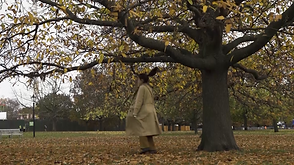


(Please click on these images to enlarge the view)
In turn, she asked me what I felt the difference between these photographs' visual effects was, and if I thought they were the same as what I see with my eyes.
I observed carefully for a long time and replied quite honestly that the first three pictures did not look very real compared to the last three, but they all differed from what I saw with my eyes.
Yet she still didn't answer my questions, just showed me some more videos.
After watching these videos, I seemed to understand the point Chris was trying to make.
Firstly, Chris believes that whether the footage filmed by the camera is a true representation of what is seen on a visual level depends to a large extent on the quality of machine itself and the lens. In comparison to a standard version of a normal camera or a professional-grade camera that takes film, the broadcast-grade cameras we focus on in this field are considerably different in terms of structure, quality, and the footages they film.

professional-grade broadcast-grade normal
The visual footage captured and visualised by cameras of varying quality and performance differs as well. Broadcast-quality cameras (which we mainly focus on), in comparison, could film footages that are quite similar to what the human eye sees. These cameras are more documentary and can recreate the visual content of what the eye sees to the greatest extent possible.
Meanwhile, the zoom function of the lens also affects the range of visual senses. As the human visual field is limited and the frame range of a wide-angle lens is often much larger than the human eye, a wide-angle lens is often able to see more than the naked eye can. At the same time, the field of view presented by these wide-angle lenses, as well as the imaging capabilities of the camera's display, can in turn affect our own sight and even create false visual illusions for our brains, making us believe that what the camera is seeing is what our eyes are actually seeing.
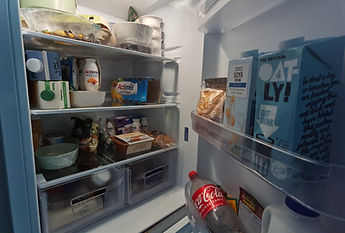


(Please click on these images to enlarge the view)
QUESTION 2 : Hearing: can the camera construct a more complete auditory world?
The ear has an upper and lower limit to what it can hear, but the use of microphones and headphones helps to widen this range, allowing filmmakers to hear tiny microscopic sounds that they otherwise would not hear.
The ear, for example, is often difficult to hear room tone in a room. As a result, while filmmakers are shooting in an extremely quiet environment, their ears will assume that the environment is completely silent. However, filmmakers' hearing limits are enlarged with the use of microphones and portable recorders, and they can hear the actual room tone, including the sound of air moving through the area and the sound of breathing.
Click on the video below to hear the sounds in the silent space
All of these videos filmed in Holland Park, London W11 4UA
QUESTION 3 : Do you trust the world as you see it through cameras and lenses or as you sense it with your own eyes and ears?
Chris believes that the world is more realistic and believable when seen through a lens and camera. According to her, the lens can sense what the eye cannot see because the lens can zoom in and out, whereas the human eye crystal cannot. Meanwhile, with the help of microphones and headphones, she could hear more sounds that are subtle and easily overlooked. All of this therefore constructs a more complete sensory world for Chris.